People share an inseparable connection with the fashion industry. They influence and define the industry, and also determine its trajectory and future In the fashion industry, how brands attract customers requires continuous renewal. Brands need to agilely capture customers’ needs and constantly improve to gain customers’ attention. Taking Generation Z as an example: they are the first digital natives, growing up surrounded by technology and the internet, adept at embracing new things and craving social influence and self-expression. Thus, brands can leverage the internet-their most used platform— to disseminate innovative designs and visuals to win their trust. According to Posner, H. (2024) Marketing fashion: strategy, branding and promotion.
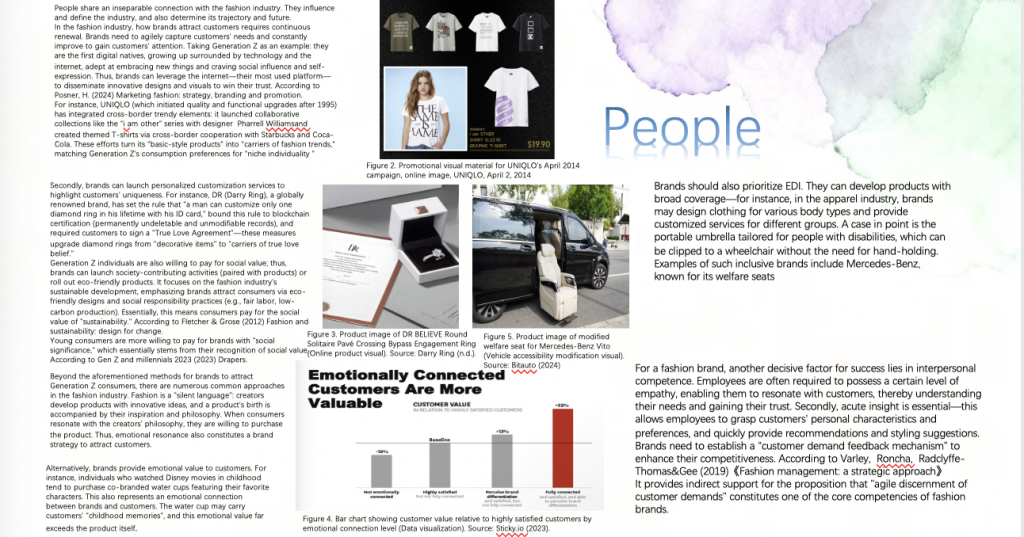
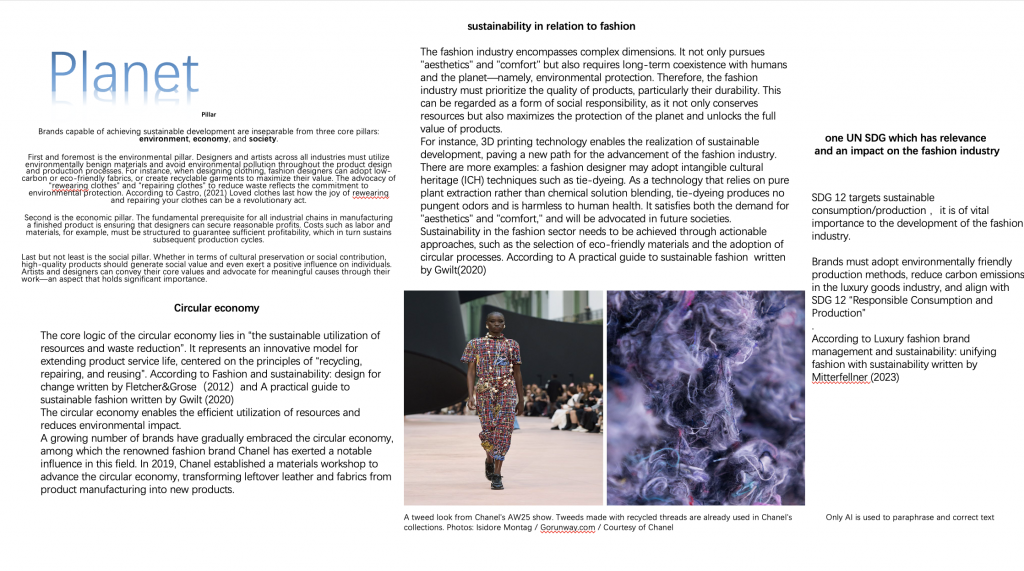
For instance, UNIQLO (which initiated quality and functional upgrades after 1995) has integrated cross-border trendy elements: it launched collaborative collections like the “i am other” series with designer Pharrel Willlamsand created themed T-shirts via cross-border cooperation with Starbucks and Coca-Cola. These efforts turn its “basic-style products” into “carriers of fashion trends,” matching Generation Z’s consumption preferences for “niche individuality” Secondly, brands can launch personalized customization services to highlight customers’ uniqueness. For instance, DR (Darry Ring), a globally renowned brand, has set the rule that “a man can customize only one diamond ring in his lifetime with his ID card,” bound this rule to blockchain certification (permanently undeletable and unmodifiable records), and required customers to sign a “True Love Agreement”-these measures upgrade diamond rings from “decorative items” to “carriers of true love belief.”
Generation Z individuals are also willing to pay for social value; thus, brands can launch society-contributing activities (paired with products) or roll out eco-friendly products. It focuses on the fashion industry’s sustainable development, emphasizing brands attract consumers via eco-friendly designs and social responsibility practices (e.g., fair labor, low-carbon production). Essentially, this means consumers pay for the social value of “sustainability.” According to Fletcher & Grose (2012) Fashion and sustainability: design for change.Young consumers are more willing to pay for brands with “social significance,” which essentially stems from their recognition of social value
According to Gen Z and millennials 2023 (2023) Drapers.
Beyond the aforementioned methods for brands to attract Generation Z consumers, there are numerous common approaches in the fashion industry. Fashion is a “silent language”: creators develop products with innovative ideas, and a product’s birth is accompanied by their inspiration and philosophy. When consumers resonate with the creators’ philosophy, they are willing to purchase the product. Thus, emotional resonance also constitutes a brand strategy to attract customers.
Alternatively, brands provide emotional value to customers. For instance, individuals who watched Disney movies in childhood tend to purchase co-branded water cups featuring their favorite characters. This also represents an emotional connection between brands and customers. The water cup may carry customers’ “childhood memories”, and this emotional value far exceeds the product itself.
Brands should also prioritize EDI. They can develop products with broad coverage for instance, in the apparel industry, brands may design clothing for various body types and provide customized services for different groups. A case in point is the portable umbrella tailored for people with disabilities, which can be clipped to a wheelchair without the need for hand-holding.
Examples of such inclusive brands include Mercedes-Benz, known for its welfare seats
For a fashion brand, another decisive factor for success lies in interpersonal competence. Employees are often required to possess a certain level of empathy, enabling them to resonate with customers, thereby understanding their needs and gaining their trust. Secondly, acute insight is essential-this allows employees to grasp customers’ personal characteristics and preferences, and quickly provide recommendations and styling suggestions.
Brands need to establish a “customer demand feedback mechanism” to enhance their competitiveness. According to Varley, Roncha, Radclyffe-Thomas&Gee (2019) (Fashion management: a strategic approach.It provides indirect support for the proposition that “agile discernment of customer demands” constitutes one of the core competencies of fashion brands .
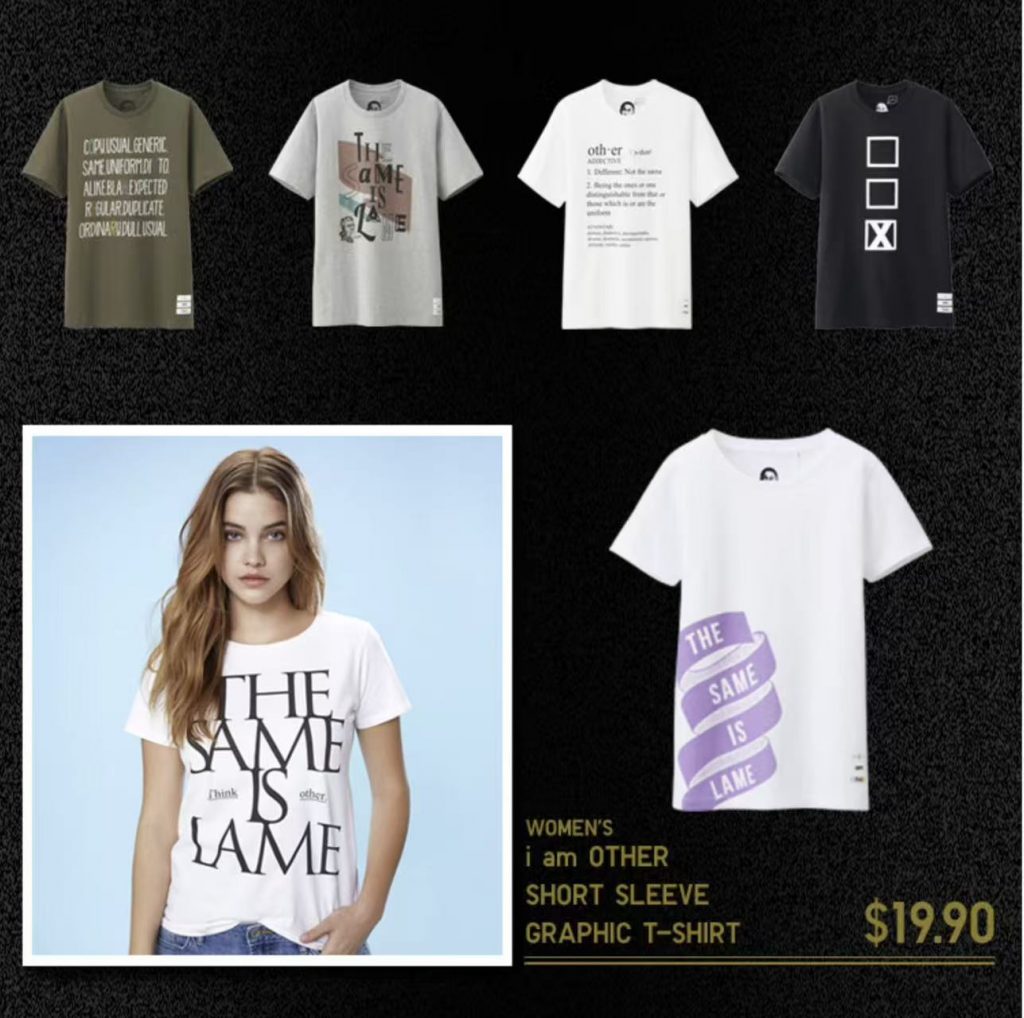
Figure 2. Promotional visual material for UNIQLO’s April 2014
campaign, online image, UNIQLO, April 2, 2014
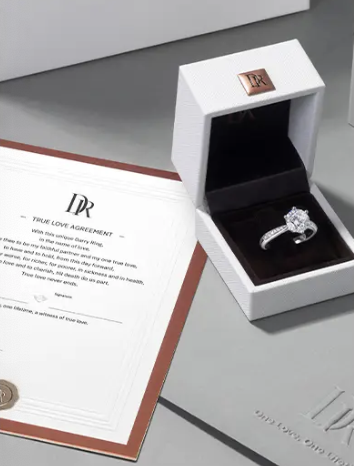
Figure 3. Product image of DR BELIEVE Round Solitaire Pavé Crossing Bypass Engagement Ring (Online product visual). Source: Darry Ring (n.d.).
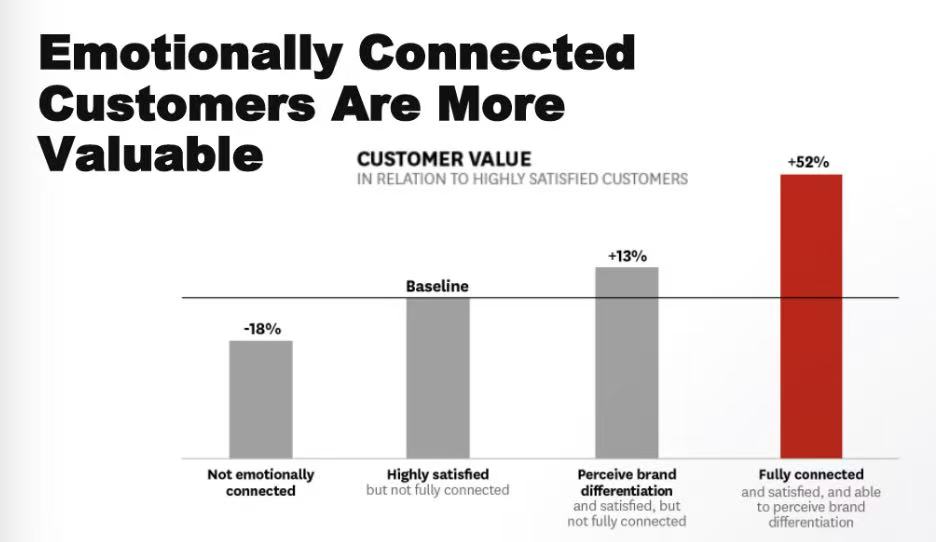
Figure 4. Bar chart showing customer value relative to highly satisfied customers by emotional connection level (Data visualization). Source: Stickv.io (2023).

Figure 5. Product image of modified welfare seat for Mercedes-Benz Vito (Vehicle accessibility modification visual).
Source: Bitauto (2024)
Figure 1 is on the planet page